
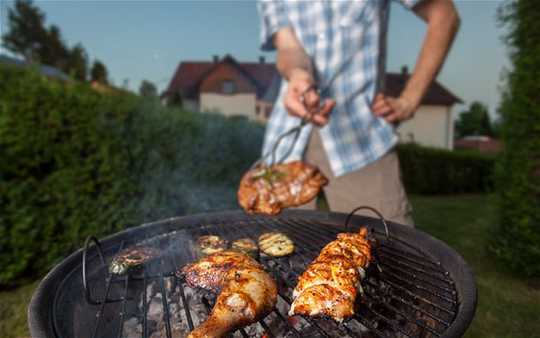
Poison control experts have advice for how to avoid food poisoning at your BBQs and picnics.
“Forgetting about food safety is a recipe for disaster,” says Diane Calello, executive and medical director of the New Jersey Poison Control Center at Rutgers New Jersey Medical School. “Don’t prepare food if you have any kind of respiratory illness or infection, as this puts your guests at risk of becoming ill. No matter how busy your kitchen gets during the holidays, always remember the risks of improperly handling food.”
Food poisoning peaks in the summer, because warmer temperatures allow foodborne germs to multiply quickly. “It’s important to remember the ‘danger zone’ as it pertains to food safety: The risk of food poisoning increases between 40°F and 140°F,” says Calello. “The effects of food poisoning can happen between a few hours to a few days after ingestion. Symptoms may include nausea, vomiting, stomach cramps, diarrhea, and fever.”
Periodically check pantries, refrigerators, and freezers to make sure they don’t contain any recalled foods linked to contamination and outbreaks. Food contamination is a real concern, not only for meat and seafood products, but also for fresh fruits and vegetables.
Get The Latest By Email
Since foods can become contaminated at any point from the harvest to table process, remember to follow basic food safety practices when preparing, cooking, and storing foods:
- Wash your hands with soap and warm water before and after preparing foods.
- When shopping, always pick up meat, poultry, or seafood right before checking out and to keep these items separate from other items in your cart.
- Wash fruits and vegetables well and keep them from touching any surfaces or utensils that were exposed to raw meat.
- Keep meat and poultry in the fridge or a cooler until you are ready to start cooking.
- Use a food thermometer to make sure that meat is cooked all the way through, to a temperature hot enough to kill harmful bacteria and germs.
- Divide leftovers into smaller portions and put them in covered shallow containers—this allows the food to cool properly to prevent bacteria from growing.
- Put all food, especially hot dishes, meat/poultry/seafood, salads, or items containing mayonnaise, into the fridge within two hours of cooking, or within one hour if the temperature is 90°F or above.
- Avoid eating raw cookie dough, bread batter, or cake/brownie mixes as it contains raw ingredients that may be contaminated with a variety of harmful germs (bacteria, viruses, parasites): E. coli from the flour and salmonella from eggs. (Baked/cooked goods are safe to eat because the high temperatures in the cooking process kills bacteria.)
Source: Rutgers University
books_food