Cost overruns and delays are pushing the nuclear industry into a financial black hole that threatens any future expansion.
Any lingering hope that a worldwide nuclear power renaissance would contribute to combating climate change appears to have been dashed by US company Westinghouse, the largest provider of nuclear technology in the world, filing for bankruptcy, and the severe financial difficulties of its Japanese parent company, Toshiba.
After months of waiting, Toshiba still could not get its auditors to agree to its accounts this week. But it went ahead anyway and reported losses of nearly $5 billion for the eight months from April to December, in order to avoid being de-listed from the Japanese stock exchange.
The company admitted it too could face bankruptcy, and is attempting to raise capital by selling viable parts of its business.
In a statement, it said: “There are material events and conditions that raise substantial doubt about the company‘s ability to continue as a going concern.”
Nuclear reactors
The knock-on effects of the financial disasters the two companies face will be felt across the nuclear world, but nowhere more than in the UK, which was hoping Westinghouse was about to start building three of its largest nuclear reactors, the AP 1000, at Moorside in Cumbria, northwest England.
The UK’s Conservative government will be particularly embarrassed because, in late February, it won a critical parliamentary by-election in the seat that would be home to the Moorside plant, on the guarantee that the three reactors would be built − a pledge that now seems impossible to keep.
Martin Forwood, campaign co-ordinator for Cumbrians Opposed to a Radioactive Environment, says: “I think the day of the large-scale nuclear power station is over. There is no one left to invest anymore because renewables are just cheaper, and these prices are still going down while nuclear is always up.”
Toshiba and Westinghouse are in deep trouble because the reactors they are currently building − the same design as the ones planned for Cumbria − are years late and billions of dollars over budget. Even if the companies can be re-financed, it seems extremely unlikely they would risk taking on new reactor projects.
Both the UK and Toshiba have looked to the South Korean nuclear giant KEPCO to take over the Moorside project, but the company is unlikely to want to build the Westinghouse design and would want to put forward its own reactor, the APR 1400.
“There is no one left to invest anymore because renewables are just cheaper, and these prices are still going down while nuclear is always up”
This would delay the project for years, since the whole safety case for a new type of reactor would have to be examined from scratch.
But the company is already under pressure from within South Korea, where Members of Parliament have urged KEPCO not to take on a risky project in the UK. Twenty-eight members of the Republic of Korea’s “Caucus on Post-Nuclear Energy” have called on KEPCO not to invest in Moorside.
The other nuclear giant present in Britain, the French-owned Électricité de France (EDF), is in serious difficulties of its own. It is already deep in debt and its flagship project to build a prototype 1,600 megawatt reactor at Flamanville in northern France is six years behind schedule and three times over budget at €10.5 billion.
Originally due to open in 2012, its start date is now officially the end of 2018, but even that is in doubt because an investigation into poor quality steel in the reactor’s pressure vessel is yet to be completed.
Despite this, the company and the UK government are committed to building two more of these giant reactors in Somerset in southwest England, and have started pouring concrete for the bases to put them on. These reactors are due to be completed in 2025, but nobody outside the company and the UK government believes this is likely.
So, with troubles of its own, EDF is in no position to help Toshiba out of its financial difficulties. In the nuclear world, this leaves only the Chinese and the Russians who might be capable of taking on such a project.
The Russians will be ruled out on political grounds, and the Chinese are already helping out EDF with a large financial stake in the Somerset project. They also want to build a nuclear station of their own design at Bradwell in Essex, southeast England – another project that looks likely to take more than a decade to complete.
Vast capital costs
The problem for all these projects, apart from the vast capital cost and the timescales involved, is that the energy industry is changing dramatically. Solar and wind power are now a cheaper form of producing electricity across the world, and are less capital-intensive and quicker to build.
Despite the fact that there are more than 430 nuclear reactors in operation worldwide and the industry still has great economic and political clout, it is beginning to look like a dinosaur – too big and cumbersome to adapt to new conditions.
Nuclear power now produces about 10% of the world’s electricity, while 40% is from coal and 23% from renewables. The rest is mainly from natural gas.
Dr Jim Green, national nuclear campaigner with Friends of the Earth Australia, says: “Nuclear lobbyists are abandoning the tiresome rhetoric about a nuclear power renaissance. They are now acknowledging that the industry is in crisis.
“The crisis-ridden US, French and Japanese nuclear industries account for half of worldwide nuclear power generation.
“Renewable energy generation doubled over the past decade, and strong growth, driven by sharp cost decreases, will continue for the foreseeable future.” – Climate News Network
About The Author
 Paul Brown is the joint editor of Climate News Network. He is a former environment correspondent of the Guardian and also writes books and teaches journalism. He can be reached at [email protected]
Recommended Book:
Global Warning: The Last Chance for Change
by Paul Brown.
 Global Warning is an authoritative and visually stunning book
Related Books
Drawdown: The Most Comprehensive Plan Ever Proposed to Reverse Global Warming
by Paul Hawken and Tom Steyer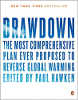 In the face of widespread fear and apathy, an international coalition of researchers, professionals, and scientists have come together to offer a set of realistic and bold solutions to climate change. One hundred techniques and practices are described here—some are well known; some you may have never heard of. They range from clean energy to educating girls in lower-income countries to land use practices that pull carbon out of the air. The solutions exist, are economically viable, and communities throughout the world are currently enacting them with skill and determination. Available On Amazon
Designing Climate Solutions: A Policy Guide for Low-Carbon Energy
by Hal Harvey, Robbie Orvis, Jeffrey Rissman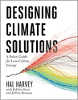 With the effects of climate change already upon us, the need to cut global greenhouse gas emissions is nothing less than urgent. It’s a daunting challenge, but the technologies and strategies to meet it exist today. A small set of energy policies, designed and implemented well, can put us on the path to a low carbon future. Energy systems are large and complex, so energy policy must be focused and cost-effective. One-size-fits-all approaches simply won’t get the job done. Policymakers need a clear, comprehensive resource that outlines the energy policies that will have the biggest impact on our climate future, and describes how to design these policies well. Available On Amazon
This Changes Everything: Capitalism vs. The Climate
by Naomi Klein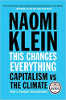 In This Changes Everything Naomi Klein argues that climate change isn’t just another issue to be neatly filed between taxes and health care. It’s an alarm that calls us to fix an economic system that is already failing us in many ways. Klein meticulously builds the case for how massively reducing our greenhouse emissions is our best chance to simultaneously reduce gaping inequalities, re-imagine our broken democracies, and rebuild our gutted local economies. She exposes the ideological desperation of the climate-change deniers, the messianic delusions of the would-be geoengineers, and the tragic defeatism of too many mainstream green initiatives. And she demonstrates precisely why the market has not—and cannot—fix the climate crisis but will instead make things worse, with ever more extreme and ecologically damaging extraction methods, accompanied by rampant disaster capitalism. Available On Amazon
From The Publisher:
Purchases on Amazon go to defray the cost of bringing you InnerSelf.comelf.com, MightyNatural.com, and ClimateImpactNews.com at no cost and without advertisers that track your browsing habits. Even if you click on a link but don't buy these selected products, anything else you buy in that same visit on Amazon pays us a small commission. There is no additional cost to you, so please contribute to the effort. You can also use this link to use to Amazon at any time so you can help support our efforts.