London has had a fleet of hydrogen-powered buses since 2010. Pajor Pawel/Shutterstock
Hydrogen is often touted in the scientific and general media as a silver bullet for reaching net zero emissions. Such articles might include the following claims:
It’s the most common element on Earth.
It can be synthesised from electricity and water.
It can be stored and used to produce heat and electricity.
It provides energy without harmful CO₂ emissions as it burns to water.
When liquefied the energy per unit weight is superior to fossil fuels.
It can deliver power via a fuel cell.
It can be transported using the existing gas grid.
It burns at a similar temperature to natural gas.
Although I could put a “but” after all of the above, hydrogen presents a compelling case for its widespread use to support net zero. So, what’s not to like about it?
Although hydrogen is the most common element in the universe it does not come for free. It is bound up in compounds such as fossil fuels and water and requires energy to break the chemical bonds to release it. It is not energy efficient: for every three units of energy provided by hydrogen you have to put one unit of energy in.
But hydrogen receives so much interest because it fits many business models. Fossil companies like it because it will be derived from fossil fuels for the next decade or more. Gas grid operators and gas boiler manufacturers see hydrogen as their only survival route as fossil fuel burning is being phased out. And the power utility companies also like it as they’ll be able to sell more power thanks to hydrogen inefficiencies.
The hydrogen promotion industry
Hydrogen is being pushed in the UK by various highly influential groups. These include an advisory council – jointly chaired by the government and Shell – an industry taskforce and a cross-party group of MPs and peers, the All Party Parliamentary Group (APPG) on Hydrogen, which is sponsored by the following:

… fossil fuel companies, gas grid operators, gas boiler manufacturers and power companies. Organisations who will benefit from the adoption of hydrogen. The group has put out a very favourable report.
There is nothing new or wrong in big business promoting their service or product, as they are mandated by their shareholders to turn a profit. Yet these groupings promote hydrogen in near isolation and do not fully present the benefits in comparison with other net zero heat and power options, for example electrification or biofuels. In this isolated context it is easy for politicians to be seduced with “what’s not to like about hydrogen?”.
Academics at Exeter and Imperial universities recently investigated this hydrogen bias in the UK heat sector. Their study concluded that: “Incumbents [actors within the heat sector] are overselling ‘green-gas’ to policy makers in order to protect their interests and detract from the importance and value of electrification.”
The APPG’s recently issued call for evidence on the role of hydrogen in powering industry may be perceived as an example of such bias. The group’s chairman, Jacob Young MP, said it wanted to hear from all relevant businesses and authorities to “understand what needs to be done to ensure that hydrogen plays a crucial role in industrial decarbonisation”.
So the outcome of the evidence is pre-prescribed to “ensure hydrogen plays a crucial role”. To my mind that is deeply troubling as it gives no scope for providing evidence for the many drawbacks. For example, it will cost much more to provide heat and power with hydrogen when compared with electrification, since inefficiencies mean you have to use much more hydrogen than electricity.
If you look at Young’s social media posts you find this:
Congratulations @KwasiKwarteng on your appointment to Secretary of State for BEIS.
— Jacob Young MP (@JacobYoungMP) January 8, 2021
As chair of the @HydrogenAPPG, I can say with confidence that Kwasi is a great friend of #Hydrogen and our agenda for Green Energy.
Now let’s see that #HydrogenStrategy!
It looks as if Kwasi Kwarteng, the government minister in charge of business and energy, is facing a lot of encouragement.
Even a relative hydrogen sceptic like me realises that it will have a role in reaching net zero. Hydrogen is a very useful building block for a range of chemicals that benefit society, none more so than ammonia which is used to produce fertiliser and help feed the planet. So our first hydrogen action should be to decarbonise current CO₂-emitting hydrogen production.
Hydrogen may also find applications in heavy haulage, aviation, shipping and high temperature industrial processes. Let’s identify where hydrogen is to be used from comparative, sustainable people, profit and planet evidence and not from hype.
The UK government is soon to publish its Hydrogen Strategy and I hope the politicians involved have sufficient knowledge to balance the evidence-weak hydrogen position pushed by organisations with something to gain. I hope they also realise that what is good for big business may not be in the best interest of the consumer.
About The Author
Tom Baxter, Honorary Senior Lecturer in Chemical Engineering, University of Aberdeen
Related Books
Drawdown: The Most Comprehensive Plan Ever Proposed to Reverse Global Warming
by Paul Hawken and Tom Steyer In the face of widespread fear and apathy, an international coalition of researchers, professionals, and scientists have come together to offer a set of realistic and bold solutions to climate change. One hundred techniques and practices are described here—some are well known; some you may have never heard of. They range from clean energy to educating girls in lower-income countries to land use practices that pull carbon out of the air. The solutions exist, are economically viable, and communities throughout the world are currently enacting them with skill and determination. Available On Amazon
Designing Climate Solutions: A Policy Guide for Low-Carbon Energy
by Hal Harvey, Robbie Orvis, Jeffrey Rissman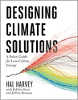 With the effects of climate change already upon us, the need to cut global greenhouse gas emissions is nothing less than urgent. It’s a daunting challenge, but the technologies and strategies to meet it exist today. A small set of energy policies, designed and implemented well, can put us on the path to a low carbon future. Energy systems are large and complex, so energy policy must be focused and cost-effective. One-size-fits-all approaches simply won’t get the job done. Policymakers need a clear, comprehensive resource that outlines the energy policies that will have the biggest impact on our climate future, and describes how to design these policies well. Available On Amazon
This Changes Everything: Capitalism vs. The Climate
by Naomi Klein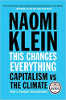 In This Changes Everything Naomi Klein argues that climate change isn’t just another issue to be neatly filed between taxes and health care. It’s an alarm that calls us to fix an economic system that is already failing us in many ways. Klein meticulously builds the case for how massively reducing our greenhouse emissions is our best chance to simultaneously reduce gaping inequalities, re-imagine our broken democracies, and rebuild our gutted local economies. She exposes the ideological desperation of the climate-change deniers, the messianic delusions of the would-be geoengineers, and the tragic defeatism of too many mainstream green initiatives. And she demonstrates precisely why the market has not—and cannot—fix the climate crisis but will instead make things worse, with ever more extreme and ecologically damaging extraction methods, accompanied by rampant disaster capitalism. Available On Amazon
From The Publisher:
Purchases on Amazon go to defray the cost of bringing you InnerSelf.comelf.com, MightyNatural.com, and ClimateImpactNews.com at no cost and without advertisers that track your browsing habits. Even if you click on a link but don't buy these selected products, anything else you buy in that same visit on Amazon pays us a small commission. There is no additional cost to you, so please contribute to the effort. You can also use this link to use to Amazon at any time so you can help support our efforts.
This article is republished from The Conversation under a Creative Commons license. Read the original article.